
The US Federal Reserve has decided to keep its stimulus programme intact and this in turn will lead to some respite for the battered emerging market economies, but it should also be borne in mind that tapering is inevitable in the medium term.
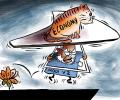
There is talk of a fresh approach to a new labour code as well as reforming land acquisition laws in such a way as to be politically.
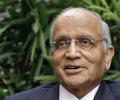
The regulatory burden is the highest on small cars, a key segment of the Indian automobile industry and having a uniform tax structure across all segments of vehicles will not augur well for the sector growth, according to Maruti Suzuki India chairman RC Bhargava. He also said India's economic growth rate could be higher if the manufacturing sector grows fast, which 'unfortunately' has remained a laggard despite the best efforts of the Narendra Modi-led government at the Centre due to implementation gaps at the ground level. "The burden of regulatory changes on the small cars is far higher than the regulatory burden on big cars and that is changing the whole market behaviour.
Deepa Gahlot lists Hindi biopics about Indian political leaders: Some worked, some did not, but they managed to avoid controversy.
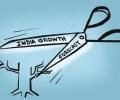
India's real GDP growth will decline marginally to 6.3 per cent in 2024 from the 6.4 per cent estimated for 2023, an American brokerage firm said on Monday. The next calendar year will be of two halves, wherein the government spending before the upcoming General Elections will be the key driver for growth, while after the elections, it will be the re-acceleration in investment growth, especially from the private sector, Goldman Sachs said in a report. From a fiscal year perspective, the brokerage said it expects growth to accelerate to 6.5 per cent for FY25 from the 6.2 per cent it has projected for the ongoing FY24, it added.

The aspirations, energy, enterprise and skills of the youth will be the force for India's economic transformation

Interview with Former governor, RBI
India needs administrative reforms that make it easy for investors to do business in the country. Currently, it is more difficult to do business in India than in Rwanda, Pakistan, Nepal, Kenya, Nigeria and Bangladesh.

India should become a middle-income country and then push to make INR (rupee) a hard currency, and till then, it must promote the settlement of global trade in the local currency, think tank GTRI said on Sunday. Global Trade Research Initiative (GTRI) said that transforming a currency into a hard currency is a complex process that hinges on several pivotal factors. Firstly, economic stability is paramount; a country must exhibit low and stable inflation, consistent growth, and a balanced trade environment.
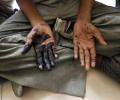
After assuming power in 2014 with a full majority of its own, the BJP-led NDA government started an ambitious process of reforming labour laws in the form of codes aimed at making the framework less cumbersome with a variety of alterations. It had planned four codes each for industrial relations, wages, social security and welfare, and occupational safety, health and working conditions. To this end, 35 central labour laws were to be converted into four codes that would have had the virtue of streamlining labour relations. But none of the proposed code Bills could be converted into a law principally because neither trade unions nor industry representatives came on board. They hold the key to India's low-growth-high unemployment paradigm but the government may struggle to push them through this time as well. Somesh Jha explains why

Says GDP growth rate from 2014-15 to 2015-16 will be greater than that of 2014-15 from 2013-14

Opportunity for India to take leadership in economic diplomacy.

The Modi administration has been unable to initiate key reforms.

'Historically, the markets tend to perform well during election years as governments aim to increase spending and call attention to growth.'

Total foreign direct investment (FDI) inflow to India declined to $74.01 billion in the calendar year 2021, which is 15 per cent lower from $87.55 billion recorded in the previous year, the ministry of commerce & industry said on Wednesday. The FDI inflow includes equity inflow, equity capital of unincorporated bodies, re-invested earnings and other capital. "FDI is largely a matter of commercial business decisions and FDI inflow depends on a host of factors such as availability of natural resource, market size, infrastructure, political and general investment climate as well as macro-economic stability and investment decision of foreign investors.

Prime Minister Narendra Modi has said that India's economic growth is a 'natural by-product' of his nine-year-old government's political stability, as he expressed optimism that it will be a developed nation by 2047 with 'corruption, casteism and communalism' having no place in our national life.

Not all change is good, but this one is, applauds Shekhar Gupta.

India has undertaken a number of structural reforms.
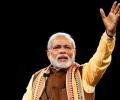
Two years of the NDA government have instituted significant reforms, including the passing of the GST bill in India but "cultural issues and saffronisation" have resulted in a slow incremental change instead of big bang reforms, according to a top American think-tank.
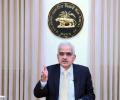
The challenge for the RBI in 2024 is likely to be less about containing elevated inflation and more about curbing excessive financial market exuberance and a 'problem of plenty', notes Sajjid Chinoy, Chief India Economist JP Morgan.
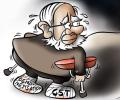
While GST and insolvency laws are among the major achievements of the Modi government, the list of failures include demonetisation, toxic banks, manufacturing hiccups and most prominently bizarre job creation figures. Mihir S Sharma takes a look at the four years of Modi government.

India's economy is in much better shape to weather tighter U.S. monetary policy.

He wants Jaitley to give investors more clarity on policies

Overall, the Survey warned that unless shifts in the vision of development were articulated and embraced, the Indian economy would lose the chance to move to a high-growth trajectory.

Prime Minister Narendra Modi's landslide election in 2014 raised hopes he would draw a line under India's socialist past, cut welfare and reduce the government's role in business.
Communist Party of India-Marxist General Secretary Harkishen Singh Surjeet said that while the Left supported the UPA government, they would not give up on their 'basic agenda'.

World Bank report on Thursday called for initiatives at the policy and institutional level to tap the economic potential it offers.

Top Tamil actor Vijay on Friday announced the launch of his political party, Tamizhaga Vetri Kazhagam, and said he will contest the 2026 assembly polls in the state.

The agency had received Rs 946.51 crore to manage its affairs in the Budget Estimates for 2023-24, which was later increased to Rs 968.86 crore in the Revised Estimates.

The European Commission urged Greece to stick to commitments it has made to reform its economy as Prime Minister Alexis Tsipras called a snap election within hours of new EU bailout cash arriving in Athens.

If the corruption issue doesn't claim Mr Baghel, the Congress's chances in the assembly election later this year are good, observes Aditi Phadnis.

Member of Parliament Rajeev Chandrasekhar feels that the economy today is bankrupt due to big spending towards social welfare programmes such as NREGA.

'What should surprise BJP supporters is Modi's call for 'stability' at the manifesto launch, a theme that he and his team members had not touched ahead of the Lok Sabha polls in 2014 and 2019.' 'The last time the party called for 'stability at the Centre' was in 1998 and 1999,' recalls N Sathiya Moorthy.

The new government that presents the full Budget for 2024-2025 in July should be ready to restructure the way divestment is managed and implemented, proposes A K Bhattacharya.

Successive plans have allocated less resources to the Railways.
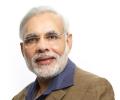
The major driver of Mod's foreign policy can be gauged from his economic priorities such as creating employment opportunities for the youth bulge. Related to this is emphasis on manufacturing, and infrastructure development, which in turn raises the issue of FDI. He has already articulated his views on all these issues, says Rup Narayan Das.

'Making money in such markets is typically harder and investors need to put in considerable effort to identify stock ideas over the year.'
.jpg)
'India is doing better than when we took office 17 months ago'.
